


Note from Them Before Us: Ross was raised by two women, and he has no doubt that they loved him. He still spent his childhood with an ache he couldn’t name, longing for a father, a man to look him in the eye and call him son. Ross shared his story for the Greater Than campaign.
“When I was growing up, and I heard the statement, ‘Ross, you’re so lucky or privileged or blessed to have had two moms who raised you,’ I wished so desperately with every ounce in my fiber and being that I actually would have been raised with one mom and one father.”
The world had a script ready for Ross, and he was offered it early and often. You’re lucky. You’re blessed. Look how loved you are. He heard it from teachers and strangers and well-meaning friends, and every time he heard it, it felt wrong because he knew it wasn’t the whole truth. He was loved, but he was also missing someone, and no one around him seemed willing to admit it.
Ross spent years without the words for what he was missing, but now, as an adult, Ross shares his story to help people understand the truth of what children have a right to.
The Circle and the Square

Ross has a way of explaining his childhood that a five-year-old could follow.
“If you remember that game you play with your children where it’s a triangle, a circle, and a square, this is how I like to say it. When you have two moms, it’s trying to fit a circle into a square. It looks really close, it might even feel really close, but it can never perfectly fit.”
Two women raised him. One leaned feminine. One took what our culture would call a more stereotypical “masculine “ role. Some folks claim this would be good enough for a child.
“Her outward appearance was masculine, but her inward heart and language were feminine... the day-to-day living was two feminine women.”
A woman can cut her hair, mow the lawn, or work on the car, and still, in her heart and her voice and the way she loves a child, be exactly what she is. A mother. A woman can be an extraordinary mother. She cannot be a father. Ross had two women in his life offering him mothering, but he did not have a father. The father-shaped space in his home stayed empty, no matter who stood near it.
The Ache He Couldn’t Name
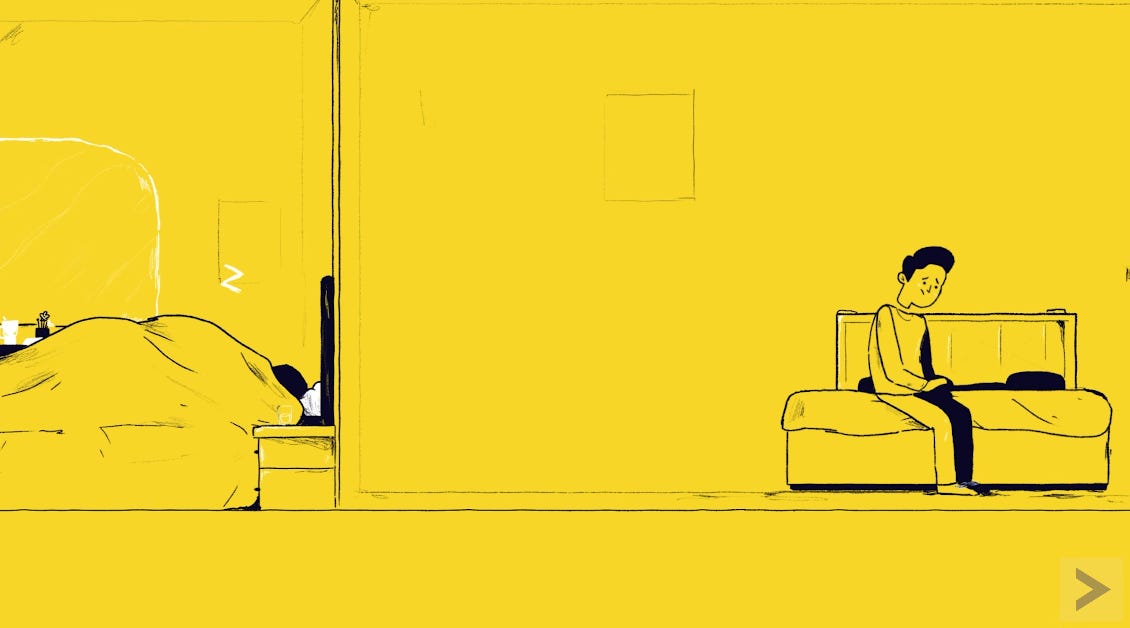
At five, six, and seven, Ross couldn’t understand what he was missing, only feel it.
“Most people have one mom, one dad. In my situation, I had two moms. And I recognized I didn’t have a dad to go in the backyard with me and throw the baseball. I didn’t have a dad to say, ‘Hey, son, I once was at this stage of my life. Here’s what I did that helped me.’”
By high school, the gap had a shape. Ross watched the other boys and felt the distance between them and himself. They knew how to talk to girls. He didn’t. They seemed to carry a map for becoming a man; he didn’t have one.
“I started feeling really inadequate. How do I make money? How do I choose a college? How do I pursue a woman?... I have no clue how to talk to a girl.”
The first lessons in how to love a woman, how to approach her and treat her well, are lessons a boy learns by watching his father love his mother. Ross had no father, and no marriage between a mother and a father to watch. The two women who raised him could teach him many life lessons, but they could not give him that. Ross arrived at the edge of manhood without the one teacher every boy is owed.
And at night, the ache had no daylight cover.
“There’s this ache, there’s this longing, there’s this desire, and there’s this recognition that something in the deepest place of my heart and my soul is missing... I was longing for a father, for a man, a male to come around me, to look me eye to eye, face to face, arms around me and say, ‘Son, I love you. I’m here for you. And I will never leave you.’”
No one taught Ross to want that. He wasn’t argued into it by a worldview or a belief system, and he says so himself. A child’s longing for a mother and father is simply there, the way hunger is there if you don’t get enough to eat. It was the longing of a child for the father he was made to know.
The Men Who Stepped In
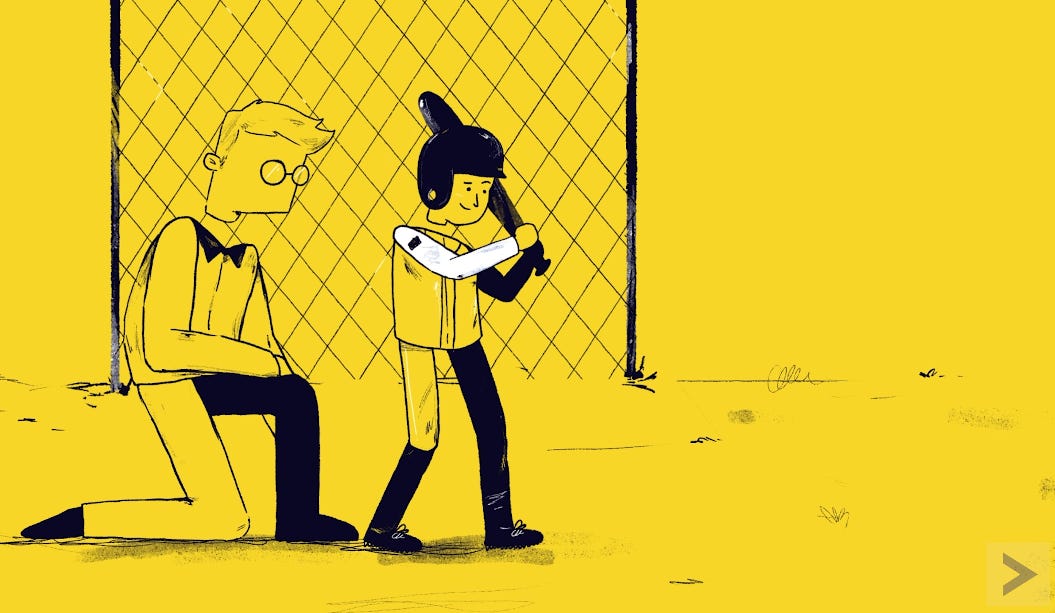
What Ross did have were borrowed fathers.
There was a baseball coach, the father of a teammate, who started asking him questions. Did he want to go to the batting cages? Did he want to grab dinner after practice? Small things to those men, but to Ross, they were enormous.
“I felt a connection with another male... I felt so seen by him.”
There was another coach with a loud Mustang who would rev the engine on the drive home.
“There was something about the confidence he had in being masculine that I’d never experienced before. And I felt alive in a way that I never felt before.”
A boy felt alive, seen, and protected for the first time, because a man paid attention to him. These men were good, and we should be grateful for them. But notice what their kindness reveals. The hole they filled was a hole that should never have existed. Ross had to receive from other people’s fathers what he should have been receiving at his own kitchen table. The gap had to be patched by visiting dads who always went home to their own children.
What He Wants Now
Ross’s story does not close with a reunion. There is no missing father who turns up on the doorstep, no name in a phone book, and no resemblance staring back from a mirror. The ache he carried into adulthood is, in his honest telling, still with him. Even his mother’s partner, who helped raise him, never reached the place a mother or father reaches:
“As much as the non-biological mom has done for me, I just could never get heart-connected to her. And it’s not a sign of dishonor or disrespect.”
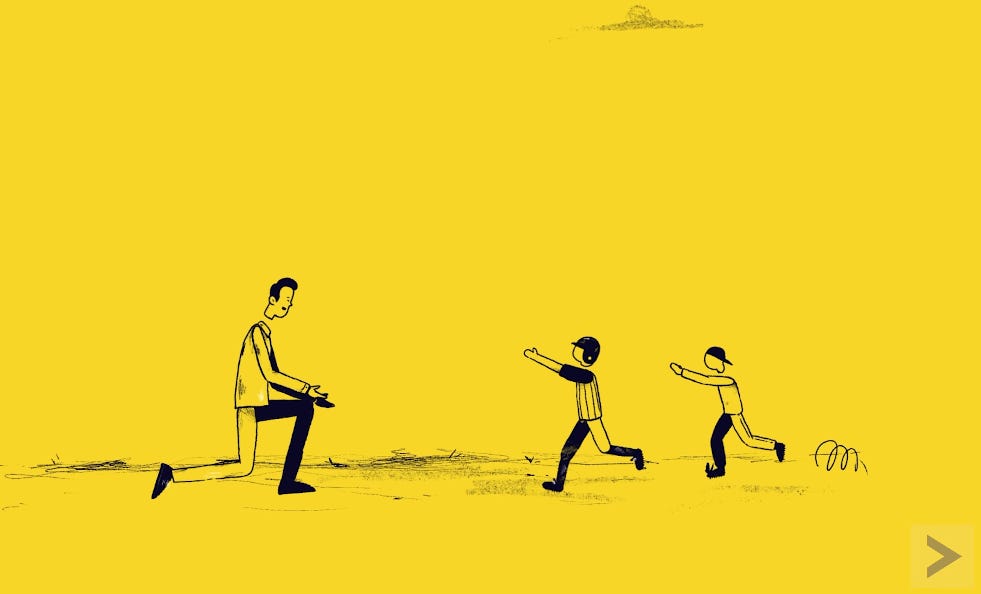
What Ross has instead is a decision. He has watched men who are now mentors and friends come home to children who sprint across the room to reach them. He has held those children. And it has shown him a door.
“Even though this might not have been my experience, I don’t have to live in that for the rest of my life. I can actually have a family of my own... I get to write my own story.”
This is not the longing resolved, but it is a man resolving to make sure his own children never feel it. Ross wants to be the father he was never given. That is the most hopeful thing in his story, and it is also an indictment of everything that left him longing in the first place.
What Ross Knew at Ten

Tomorrow is Father’s Day. Families will gather, and somewhere a man will be handed a card by a child who climbed into his lap, and neither of them will think twice about it, because a father in the home is the most ordinary miracle there is.
Ross is asking us not to look away from the children for whom it isn’t ordinary. The ones who watch that scene from the outside. The boy on the edge of his bed with no one to tell him how to become a man.
Next Friday marks eleven years since Obergefell v. Hodges. Eleven years since our highest court redefined marriage, and in redefining marriage, redefined parenthood. The ruling did not invent the longing Ross describes. Ross is older than the decision. But Ross is a witness to the truth that the decision denied. He knew at ten years old, sitting on the edge of his bed, what our law and our culture now treat as bigotry to say out loud. A child needs a mother and a father.
What changed eleven years ago was not that some adults were finally left alone to live as they chose. What changed is that we reordered parenthood itself around adult desire, declared a child’s hunger for a father a prejudice rather than a right, and then asked the whole country to celebrate the very absence children grieve. Ross was told he was lucky. He was told to be grateful for what he had and quiet about what he didn’t. That is what we now ask of thousands more children. Gratitude for the love they were given, and silence about the parent they lost.
A child has a right to the mother and the father who made him. The child, who got no vote in any of this, is owed the two people responsible for his existence. That is his by nature, before any court or any culture has an opinion about it.
Ross spent his childhood being told how fortunate he was, but he spent his nights longing for a dad. Believe the boy on the edge of the bed.
If you want to help build a world where children don’t have to sit longing for a mother or father they were intentionally denied, join the Greater Than movement today.
Find additional resources on Obergefell, Greater Than, and how children are harmed by redefining marriage below:


Them Before Us is a global movement committed to defending children’s right to their mother and father. We believe that adult desires should never come at the expense of a child’s fundamental needs.
We are not professional lobbyists or political insiders. We are ordinary people with an extraordinary conviction: children must come first in every conversation about marriage, family, and fertility. We exist to make one thing clear: when adults sacrifice for children, society thrives. When children are forced to sacrifice for adults, everyone pays the price.
Find us around the web: Facebook, X, YouTube, Instagram, Podcast, TikTok & Radio.


