

Diminishing Dads
Why jokes about dads aren't funny for kids


Let’s be honest, dads are often the butt of the joke.
In pop culture, we’re portrayed as the joyful idiot, the bumbling sidekick, the lovable dunce. It’s rare to see a father depicted as strong, wise, emotionally present, and competent.
This cultural comedy surrounding fatherhood might seem harmless at first—until it starts showing up everywhere. At work. At home. At school. And where I most recently experienced it: In the delivery room.
Now, let me start by saying – my wife is a superhero. There’s no other word for it. Anyone who has watched their wife give birth knows this. Over the last decade, she has carried and delivered four children, spending most of that time pregnant or nursing. She has endured physical and emotional extremes that I can’t comprehend. I have never admired her more than in those moments—when pain met courage, and she brought life into the world. It is a total miracle and a life-changing experience.
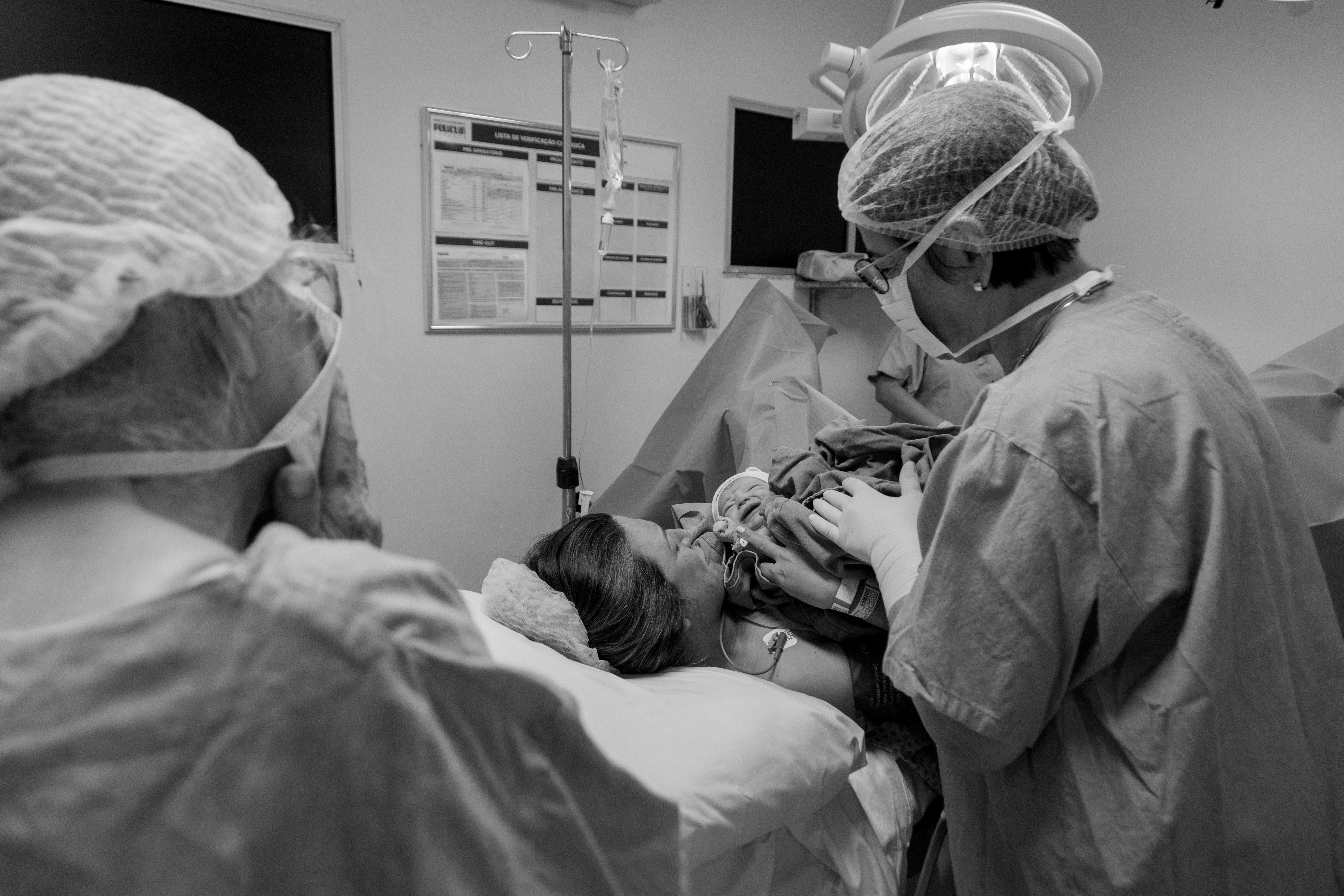
But my story is about what happened around her. And around me, as we went together through that process. Because as we welcomed each of our children into the world, I noticed a quiet, unspoken pattern in hospital delivery rooms: the diminishing of the role of fathers.
I chose to write about this (and risk the wrath in the comment section) because when these jokes grow into cultural assumptions, we can all begin to believe (and act out) the lies. That men aren’t as essential to parenting, that they’re somehow less invested, or less capable. That mothers and fathers are not coequal creators of their children, and thus not equally responsible for their care, protection, and flourishing.

Yes, the data tells us that fatherlessness is real, and more often than not, it’s the man who walks away. But cultural patterns shouldn’t dictate our moral ideals. Fathers are equal creators. They have equal responsibilities. And they are equally needed. Even in the delivery room.
From the First Interaction
We just received our hospital survey in the mail this past week. The first question was: “During this hospital stay, how often did nurses treat you with courtesy and respect?”
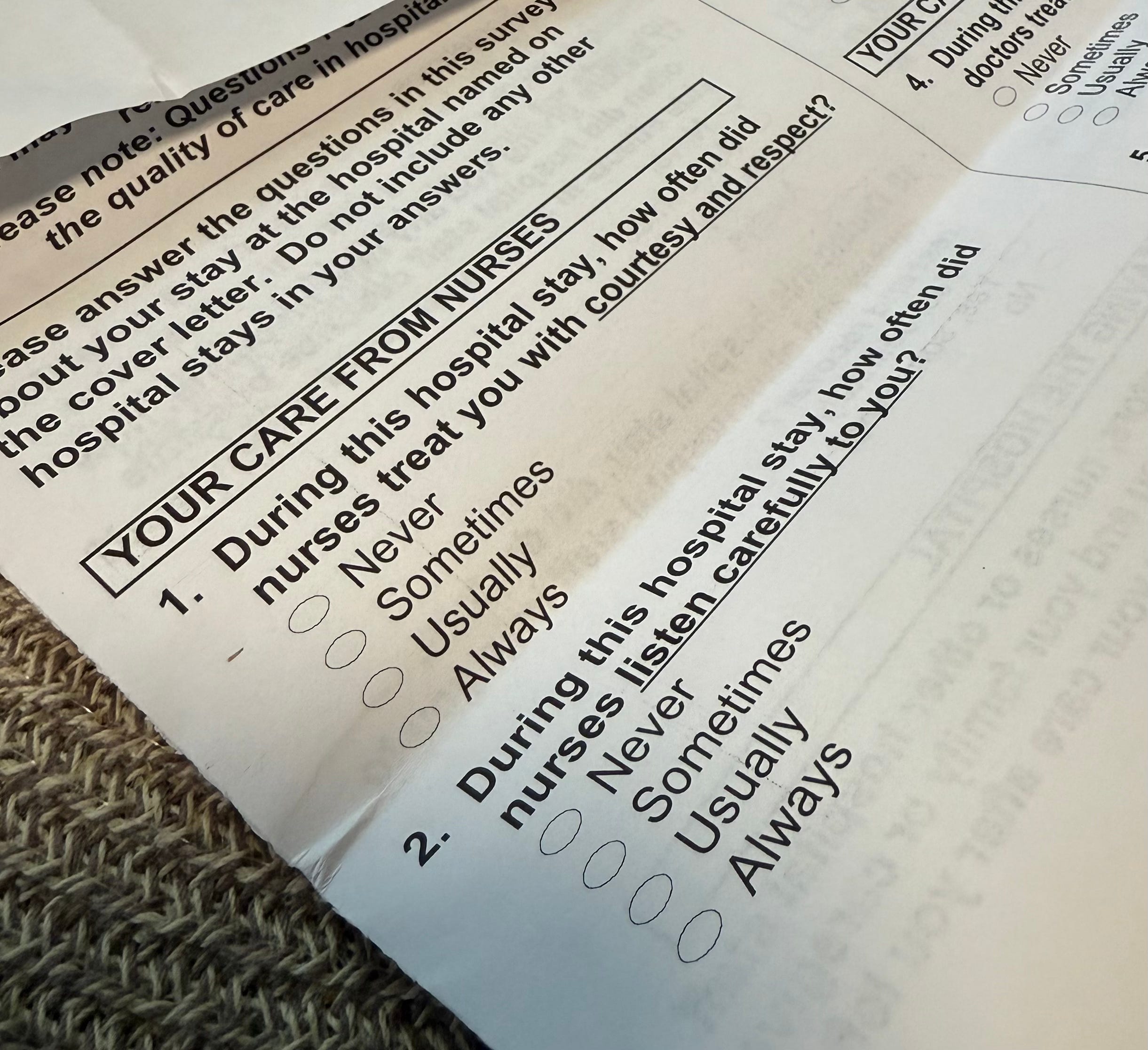
Reflecting on that, I can safely say that across four different births, only one of our nurses ever asked me my name or introduced themselves to me when entering the room for the first time. Most would introduce themselves to my wife, speak exclusively to her, and either ignore me altogether or refer to me in the third person—even with my name written on the whiteboard in the room.
At our most recent delivery, in fact, the woman checking us in spent five minutes talking to my wife, looking only at her. Then, after writing all my wife’s information on the whiteboard, she turned again to her, not me, asking: “And who is he?”
This isn’t just awkward. It is a message: You’re not really part of this.
“Support Person”
Now, despite identifying myself as both the father and the husband, I was referred to as “support person” repeatedly. The title is printed on the family board, and I can only assume it is what all medical professionals receive in their training and orientation.
I get it, we are trying to be inclusive, polite, and neutral. However, the only thing this type of word game accomplishes is to quietly erase the ideal of fatherhood. One of two people is required to create life in this world. It tells a man that he is not equally invested.
Not equally responsible.
Not equally the parent.
Generic title. Generic person.
It treats him as an accessory—an emotional assistant to the mother—rather than a co-creator of life with a permanent, irreplaceable stake in this child’s story.
Diminished by Design
Even as we made joint decisions, I noticed the power dynamic tilt away from unity. Like many couples, my wife and I predetermined our answer to a whole host of questions we knew would be asked. Knowing that during labor, my wife isn’t always in a position to have a conversation or make an important decision, we game plan everything out to make sure our wishes and desires for our child are respected.
This past delivery, when discussing vaccinations for our newborn, I explained our agreed-upon plan to the nurse, answering a question only somewhat directed at both of us. The nurse then immediately looked back to my wife and asked again, just to “confirm that’s what she wanted”—as if my input had been a disruption.
On two occasions, we faced complications with our child in labor. Both times, nurses directed all medical updates about our child, explanations about next steps, and questions on how to proceed exclusively to my wife. When I asked questions, I was brushed off or outright dismissed.
“He Can Go Get It”
One less serious but still informative moment during our most recent birth captured the tone perfectly.
My wife asked her nurse for a fresh cup of water and ice, “...whenever she had a second”.
Without missing a beat, the nurse turned to my wife—not me—and said:
“He can go get it. Look, I’m a little busy.”
(Having absolutely no idea where that was) I asked, “Um, do you know where I can find that?”
She waved toward the hallway:
“Just go out there—you’ll find it.”
This order-you-around mentality emphasized the “support person” message: “You’re just lucky to be here.”
The Couch
Finally, I’ll share just one more example.
And yes, it is with fear and trembling that I share about the infamous labor and delivery room couch that so many dads get roasted for complaining about on social media. But this isn’t about the size/uncomfortability of the couch.
On two separate stays, nurses came in around midnight to check my wife out or introduce themselves at shift change. Both times, they immediately turned on all the overhead lights. When my wife asked them to dim the lights and try to keep things quiet so I could keep sleeping, the nurses made a “girl-to-girl” kind of joke to my wife, saying, “Oh, don’t worry, we know you have to say that,” and another saying, “He doesn’t need the rest, what has he done anyway?”
As if she were under some kind of pressure to pretend to care about me resting.
They were playing to a vibe we’ve all seen in culture: one where the man’s needs are not just secondary—they’re comedic.
What If I Hadn’t Been So Sure?
Now, I’m a self-confident man who is legally married to my wife. I have a right to be there. I’ve been through this four times. I know my wife values me. I know we’re united. I know how to speak up when something’s off for her or my child.
But what if I weren’t?
What if I were a first-time dad?
Young. Unmarried. Unsure of where I fit.
What if I was already wondering: Am I wanted here? Do I matter? Am I connected? And then I walk into a room where no one uses my name.
No one looks at me. No one updates me or invites me into decisions for my child.
One where I’m mocked, brushed aside, and made to feel like a nuisance or an afterthought. You wouldn’t have to kick me out. You would’ve already convinced me I didn’t belong.
More Than Bad Service
Some might call this bad customer service. Inattentive. Rude. Unprofessional.
But I believe it’s something more: A subtle but systemic cultural script—one that diminishes the role of fathers in one of the most pivotal moments in family formation. When fathers are treated like background noise during childbirth, we are telling one half of that pivotal equation that he is interchangeable, replaceable, and peripheral.
The Real Victims: Kids.
This isn’t about fragile male egos. It’s about the well-being of children.
Because when a man is mocked, excluded, or diminished in the birth room, the child risks losing more than a proud dad. They lose a collective life-changing core memory and the grounding presence of a father who believes he belongs there. We do not serve women by erasing men. We do not protect children by pretending they only need one parent. We do not build strong families by making dads feel disposable.
It isn’t complicated:
Look him in the eye.
Use his name.
Ask his opinion.
Include him in his child’s medical conversations.
Don’t make jokes at his expense.
And if he’s the father, don’t say “support”.
We’re celebrating dads all week leading up to Father’s Day on Sunday. Check out Ross’ story of being raised by his mother and her partner, and his experience of missing the father who made him.
Securing a child’s connection to his father should be one of society’s highest goals, because so much of that child’s life, health, and safety depends on it. Yet fathers are being pushed to the margins everywhere, and the same-sex marriage decision locked it into law: when husbands and wives became optional in marriage, mothers and fathers became optional in parenthood. Greater Than exists to undo that and restore the child’s claim to his own mother and father. Your gift builds the law, the research, and the coalition that defends it. Give today, for the child who can’t yet ask you to.

For more posts celebrating the importance of dads, check out these articles:


About the Author:
Josh Wood serves as the Executive Director of Them Before Us, advocating globally for the rights and well-being of children.
Them Before Us is a global movement committed to defending children’s right to their mother and father. We believe that adult desires should never come at the expense of a child’s fundamental needs.
We are not professional lobbyists or political insiders. We are ordinary people with an extraordinary conviction: children must come first in every conversation about marriage, family, and fertility. We exist to make one thing clear: when adults sacrifice for children, society thrives. When children are forced to sacrifice for adults, everyone pays the price.
Find us around the web: Facebook, X, YouTube, Instagram, Podcast, TikTok & Radio.
Man, I’ve been there. Very well written, thank you!
I wonder if it’s left over from the old days when dads weren’t even let in the rooms at all, and would just be called in after the birth. Maybe the mentality of the nurses is that we’re infringing on their domain or something.
The big cultural change of course, as you end on, is that in those old days, men might not have been allowed in the birthing room but they were at least married to the moms! These days, if dad isn’t in a strong forever marriage, treating him like unwanted waste is not a wise long term strategy…
This is one reason why home birth needs to make a comeback. My husband is my "support person" to use the term positively. Not the midwife, not a doula... my husband. We made the baby together and he is the one who steps up and does what needs to be done when I need it. Now, this very much depends on men stepping up and actually taking responsibility; if my husband let himself become an anxious wreck during birth and spiraled me down with him, then he wouldn't be someone I could rely on. But he has educated himself about birth AND what kind of support I need from him and he is responsible enough to step up and be my rock. I truly believe that kind of birth experience makes a nearly unbreakable marriage and bond.