

The "Primal Wound"
The research says it isn't only adoptees who carry this. It's every child separated from a parent by design.


In 1986, five-year-old Saroo Brierley fell asleep on a bench at an Indian train station while waiting for his older brother. He woke up alone. The train he boarded that night carried him over a thousand kilometers from home, and he ended up on the streets of Calcutta. He was too little to remember his mother’s last name or even the town or street he lived on. He went into an orphanage, and then he was adopted within the year by a family in Tasmania, and by every account grew up loved, secure, and thriving.
At twenty-five, even though he’d been “safe and loved”, with nothing materially missing from his life, Saroo started spending his nights scanning satellite images on Google Earth, searching for a landscape he’d last seen as a small child. He didn’t stop until he found it — and ultimately was able to find his mother because she was still living within walking distance of the house he was born in, waiting for him. (Source)
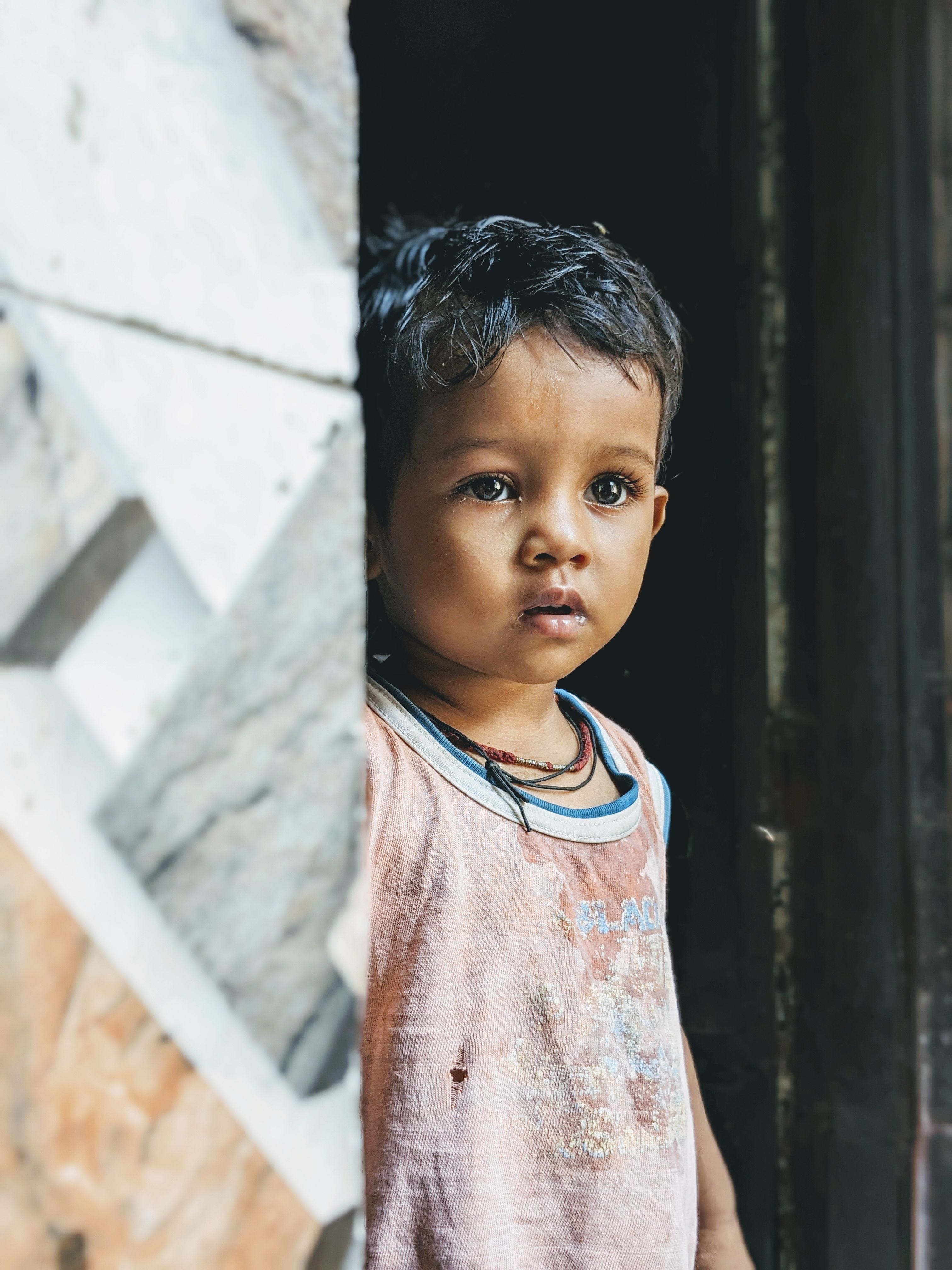
Nancy Verrier had a name for what sent him looking for the family he came from, even though he loved his adoptive family and they loved him.
Followers of Them Before Us have heard the term “primal wound” used in reference to adoption loss, and to the growing number of children intentionally denied a mother or father through surrogacy and donor conception. The term makes people uncomfortable. Some adoptive parents may bristle at it, while others resonate, having found a name for their child’s experience. Parents who used a donor or a surrogate (intentionally choosing the child’s loss) more often reject the term. It is difficult to look at the infant in your arms and consider that you are only holding her because she has experienced profound loss. This is especially true when you inflicted that loss. Nobody wants to look at the infant they love and accept that she might be suffering.
But thirty years of research have confirmed: she might be.
Nancy Verrier’s book The Primal Wound landed in 1993 as a challenge to the “baby scoop” era of the mid-twentieth century. The operating assumption was this: a baby relinquished before she could form memories would carry no wound from the loss. This was the precursor to the “all babies need is to be safe and loved lie. Unmarried women with unplanned pregnancies were sent away, and often pressured into relinquishment; adoptions were sealed, and children were often never told their origins. Everybody moved on - everybody except the children.
Verrier named what many adoptees and adoptive families had been struggling to put into words. She wrote that it was difficult, “and understandably so, to change our thinking about adoption from that of a wonderful, altruistic event to that of a traumatic, terrifying experience for the child.” Without acknowledging a child’s loss, she argued, there is no permission, explicit or implicit, to mourn.
She was right, and the research has kept proving it.

The bond forms before birth
A child’s relationship with her mother does not begin at hospital discharge. It begins in the womb. Before birth, a baby is learning the sound of a specific voice, responding to one person’s emotional state, and growing familiar with one woman’s smell. By the time she is born, she already knows her mother.
A 2016 Stanford University study confirmed just how deep this goes. Researchers found that a far wider range of brain areas is activated when children hear their mothers than when they hear the voices of other women, and this brain response predicts social communication ability. The regions responding most strongly to a mother’s voice extend beyond auditory areas to include those involved in emotion, reward, social functions, and face recognition. As lead author Daniel Abrams noted, many social, language, and emotional processes are learned by listening to a mother’s voice, and that voice has unusually direct access to multiple brain systems simultaneously. (Source)
Stanford Children’s Health notes that newborns recognize their mother’s smell and voice immediately after birth, using that familiarity as a source of comfort and security from the first moments of life. The baby does not develop this preference over time. She arrives already oriented toward one person, and that orientation is not transferable. (Source)
When that person disappears
A 2018 study from Indiana University found that when a baby is taken from its mother for even a brief period early in life, the separation alters adult brain function and cognition in lasting ways. In the study, young rats were removed from their mothers for 24 hours at nine days old, a critical period of brain development. The separated animals showed memory impairment, reduced communication between brain regions, and neurological changes similar to those found in people at risk for schizophrenia. “Children exposed to early-life stress or deprivation,” the researchers wrote, “are at higher risk for mental illness and addictions later in life.” The separation window was 24 hours. (Source)
A 2022 review from NYU’s Emotional Brain Institute found this pattern across dozens of studies: early adversity within the caregiver-infant relationship disrupts the trajectory of brain development at every level of analysis, from genes and epigenetics to neurotransmitters and hormones, to systems-level brain structure. (Source)
Epigenetics is not a metaphor. Maternal separation can permanently alter how genes are expressed. Repeated postnatal maternal separation has been shown to produce lasting hyperactivity of the stress hormone system and persistent DNA methylation changes. The stress of losing one’s mother can be written into a child’s biology in ways she carries for life. (Source)
A 2024 review confirmed that separation disrupts neuroinflammatory responses and alters the metabolism of neurotransmitters, including noradrenaline and serotonin, and that disruption of maternal affiliation produces strong deterioration reactions in newborns. (Source)
Thirty years of research have traced exactly how maternal separation rewires a child's biology, down to which genes get expressed. The primal wound isn’t just a theory.
What animal research tells us
Setting up a controlled study on maternal loss in human infants would be highly unethical. So researchers have worked from animal models. Harry Harlow’s monkey experiments of the 1950s and 60s established that maternal connection is foundational to healthy development. His research has not been repeated because the designed maternal deprivation in his studies was considered unnecessarily cruel and remains controversial to this day.
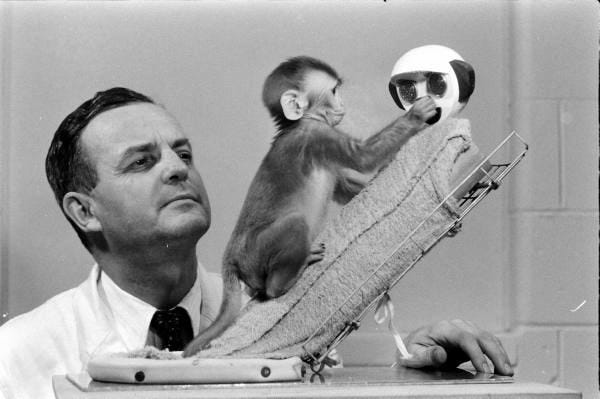
Science has moved well past Harlow. A 2021 study published in the Journal of the American Academy of Child and Adolescent Psychiatry used a controlled nonhuman primate model to examine the effects of at-birth adoption, and was specifically designed to rule out pre-adoptive adversity, the objection most often raised against older studies. Even when adoption occurred at birth, with all other needs met by a female member of the same species, infant primates showed increased risk for atypical behavior and anxiety. The separation itself was the variable. (Source)
No ethics board would approve a human study built on that design - assigning newborns at random to be separated from their mothers just to observe what happens. That's precisely why this research exists in primates and not in people. Surrogacy arranges the same separation on purpose, by contract, for a fee, agreed to before the child is even conceived. What no researcher is permitted to test on a child, the fertility industry sells.


The extrapolation from primates to humans is imperfect. But humans form deeper emotional attachments than monkeys, and human brains are more profoundly shaped by early relational experience. If separation produces measurable neurological disruption in primates, the animal data is a floor for what happens in children, not a ceiling.
Do you want to be part of the movement determined to elevate the rights of children in the culture and the courtroom? Make a monthly gift today and join the movement to protect the rights of children.
The paradox that adoptive families live with
Adoptees are typically raised in stable, two-parent homes with above-average resources. And yet the research indicates that the early loss they experienced—even a loss they may not remember—has a lasting impact.
Analysis of U.S. Department of Education data by the Institute for Family Studies found that the odds of a student having a severe emotional disturbance were more than 10 times higher for adopted students than for students living with both married biological parents. Adopted students had greater odds than students from single-parent or stepfamily homes of having parents contacted for schoolwork or behavior problems and of repeating a grade. (Source)
A University of Minnesota study published in Pediatrics found that the odds of a reported suicide attempt were approximately four times greater in adoptees compared to non-adoptees, a relationship that held after adjustment for psychiatric symptoms and family environment. (Source)
A 2022 study comparing a small sample size of adopted and non-adopted individuals who died by suicide found significantly higher rates of ADHD, mental health comorbidity, Cluster B and C personality disorders, and elevated adversity scores among adopted individuals. (Source)
None of this indicts adoptive parents. Most of them love their children fiercely. What the data indicts is the old pretense that relinquishing parental rights is a simple matter, that the child will carry no wound because he is too young to remember. The simple truth is that adoption always follows loss. A better understanding of the trauma that precedes adoption has better equipped adoptive parents to acknowledge the loss, create space for grief, and help their children process the loss they’ve experienced. Adoption is not a magic reset button. It is a lifeline extended to a child who has already experienced painful trauma. It recognizes real loss and real needs.
This is not only an adoption story
The implications of maternal separation and biological bonding extend beyond adoption. It applies to every child deliberately separated from her biological mother or father by adult design.
No, Adoption and Third-Party Reproduction Are Not the Same

Them Before Us is firmly opposed to third-party reproduction, and we are unapologetic supporters of adoption.
Donor conception and surrogacy are not adoption. But they share the feature Verrier was describing: a child who grows up without her biological parent. In adoption, the loss is at least named a loss. In donor conception and surrogacy, the same loss is rebranded as a gift, and the child is expected to receive it as one.
Donor-conception researchers disagree sharply about how to weigh the evidence on long-term outcomes. A widely circulated 2024 review claiming to synthesize 50 studies has since drawn scrutiny for miscategorizing findings and for drawing nearly half its sample from just five repeated-measure cohorts — including a dozen papers from Golombok’s long-running lesbian-family studies — rather than from fifty independent populations, a pattern that makes the evidence base look far broader than it is. What holds up independently, echoed even by researchers broadly supportive of donor conception, is narrower and harder to dismiss: children told early about their donor origins consistently fare better than those who find out later or by accident. (Source)
A separate self-report study of 272 donor sperm-conceived adults found increased rates of attention deficit disorder, autism, identity formation problems, learning difficulties, panic attacks, and alcohol and drug dependency compared to spontaneously conceived peers. The children grew up and became adults who were able to describe what it cost them to live without access to their biological origins. (Source)
Qualitative research has shown that finding donor connections, meaning one’s biological relatives, leads to greater self-understanding and a sense of belonging. The longing is real. Whether the adults who made that choice are willing to recognize that the loss is real is up to them. The children already know. (Source)
The children who cannot speak for themselves
Children are not blank slates. They arrive in the world already attached, already oriented, already belonging to someone. When that belonging is severed, their mind and bodies register the loss. It shows up in stress hormones, in behavioral outcomes, or in a search for biological connections that can last a lifetime.
Saroo Brierley’s mother never left the neighborhood she raised him in, on the chance that he might someday find his way back. He did, not because his life in Australia was lacking, but because some part of him needed to find his biological origins. Millions of people watched that story and called it inspiring. Fewer noticed what it actually was: a grown man, decades and a continent removed from any material need, still looking for his mother.
Society builds family policy around adult desire and calls it progress. But when children are just accessories to be cut and pasted into whatever family arrangements adults intend, children are the ones who pay the ultimate price, even with their physical bodies and mental well-being. We can build family policy around what adults want, or around what children need. Not both.
Them Before Us is a global movement committed to defending children’s right to their mother and father. We believe that adult desires should never come at the expense of a child’s fundamental needs. If you believe children deserve a mother and a father, join us by making a monthly gift today.
We are not professional lobbyists or political insiders. We are ordinary people with an extraordinary conviction: children must come first in every conversation about marriage, family, and fertility. We exist to make one thing clear: when adults sacrifice for children, society thrives. When children are forced to sacrifice for adults, everyone pays the price.
Find us around the web: Facebook, X, YouTube, Instagram, Podcast, TikTok & Radio.
 | A guest post by
|
I saw the movie! It was quite eye opening!