

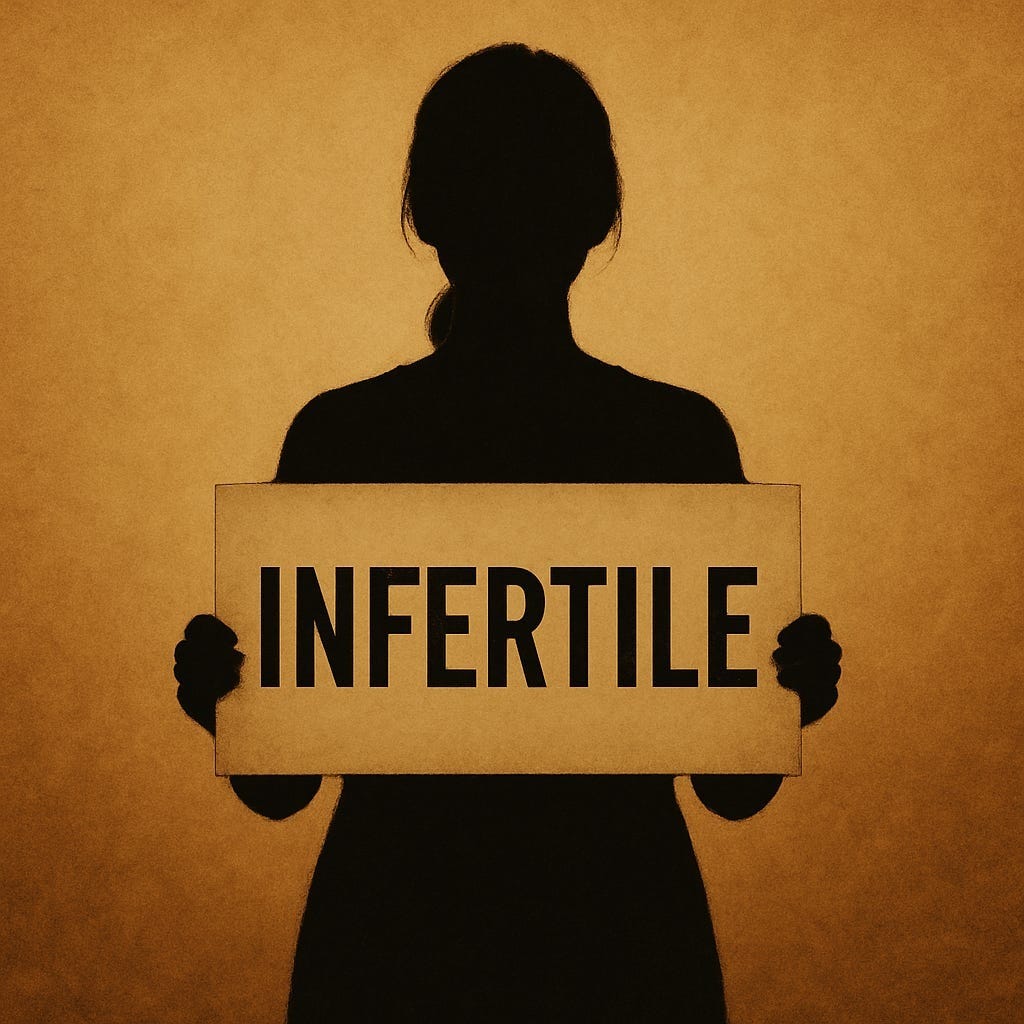
"Infertile."
The label I accepted and the questions no one asked.


We hope you enjoy reading this guest post from Katy Talento ND ScM or the audio edition read by the author! Follow her work at All Better.
You might have noticed that infertility, in vitro fertilization (IVF), restorative reproductive medicine, and related topics have been lighting up the inter-webs and the political landscape for almost two years now.
The spark was the 2024 Alabama Supreme Court ruling that, since state law confers human rights on the very youngest humans, you can’t just waltz into an IVF clinic’s frozen embryo farm and start breaking glass.
Boy, are we missing the point.
IVF is downstream of a much larger problem. This is my (Katy Talento’s) own story about that problem.
It’s not like me to just accept what people in authority tell me. Usually, there’s an eye-roll or a snarky grumble and a condescending version of “prove it” that I picked up in epidemiologist school.
But when the white coat in front of me said, “This isn’t something we can treat or cure,” for some reason, I accepted it as gospel truth.
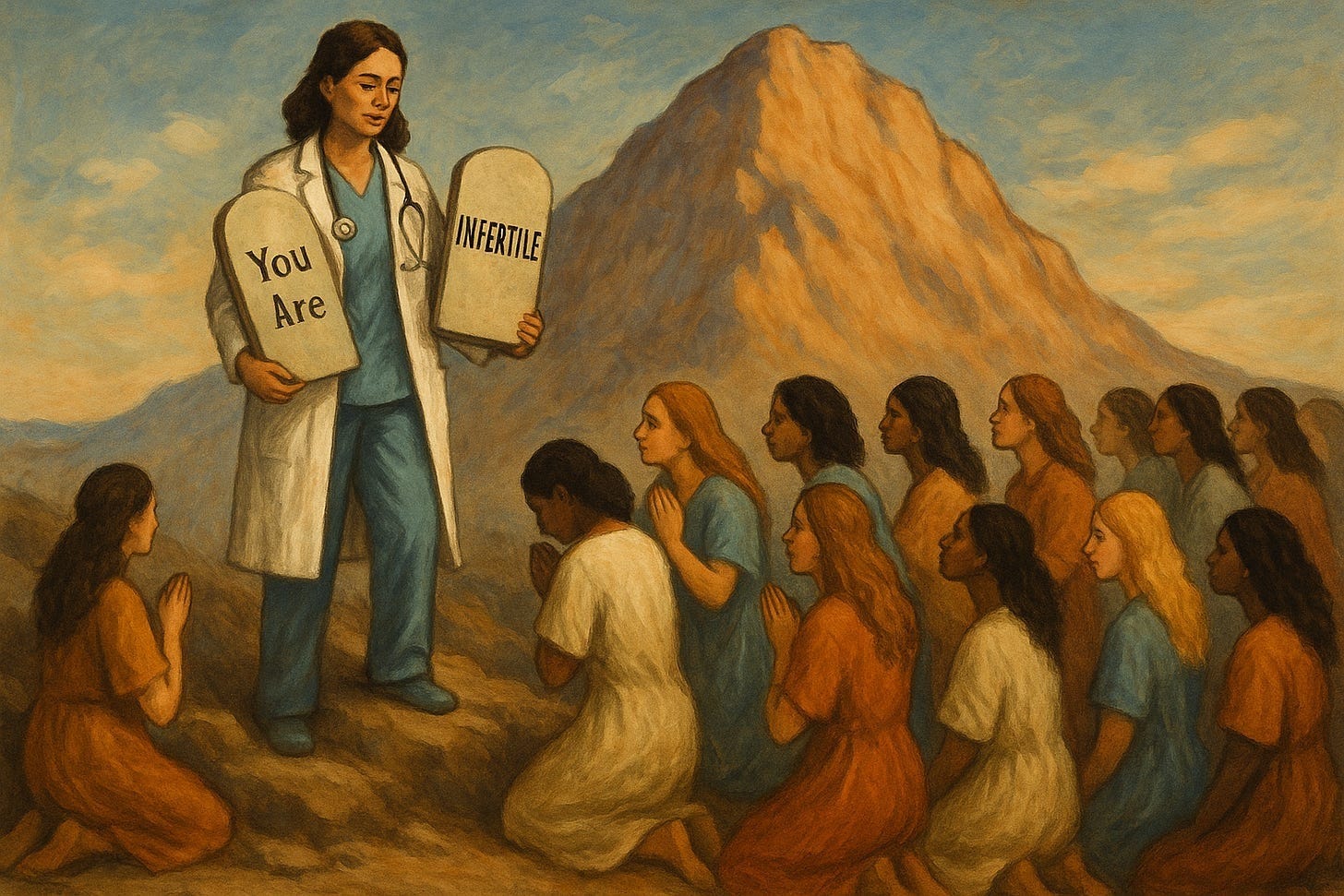
Literally, not for one second did it cross my mind that she might be wrong, intellectually lazy, uninformed, incompletely educated, incurious, incompetent, programmed, ill-equipped, or any other adjective that might have changed my response and changed my destiny.
Instead, I bared my metaphorical chest and allowed the white-hot brand of her conclusion to sear my metaphorical flesh.
“Infertile.”
Even now, more than a decade later, just seeing that word in print and feeling the weight of it still makes my stomach seize up, and my breath catch in my throat.
I had been driving two hours each way, every day for ten days, to the hospital where a well-respected expert in restorative reproductive medicine practiced, so that a penis-shaped plastic probe could penetrate me, cast its sound waves into my womb, bouncing off my ovaries, recording my follicles growing, and deliver its verdict.
On the basis of just one cycle – one set of images of a primary follicle not releasing an egg before closing in on itself – the hex was placed.
I won’t dignify the specific diagnosis by naming it here, since it confers no information, sits on top of no extensive body of scientific literature, and is merely descriptive of the symptom.
Well, and also because I can’t ever remember the actual name because it’s so nonspecific.
Why should I? “Infertile” packs a more actionable punch.
I was at a Catholic hospital, and so there was a semblance of a chapel not yet stripped of actual vestiges of Christianity, post-modern and tragic though they may be. At that point, aesthetic snobbery was secondary; I just needed somewhere to fall apart.

And there she was, Our Lady of Bon Secours. And St. Joseph right next to her. And the Child Jesus between them.
After a few minutes of reflection, the message seemed apparent.
St. Joseph adopted God. The Blessed Mother adopted the world. If adoption was good enough for them, it would be good enough for me.
Since I’d been at war with my uterus since puberty (more on that in a moment), there was something intuitively unsurprising about this turn of events. Thy will be done, and all that.
But let’s get real.
Once I had finally met the profoundly decent human with the misfortune of attaching himself to me, by God, I wanted to make babies with him. I wanted his adorably sweet face merged with my fat cheeks on a no-doubt brown-eyed munchkin looking up at us, underneath what I hoped would be his thick, wavy Italian locks instead of the Irish wisps disappointing me in the mirror each day.
I always knew I wanted to be a mother in some way, but biological motherhood wasn’t an essential aspect of the plan – not until the prospect of his babies was on the table.
And then I wanted it more than life.
Which brought my thoughts back to him, himself, beyond just his genes, as I wailed in that chapel.
What would I tell him? How could I face him? How would he live with the disappointment and regret of the consequences of his fateful proposal the year prior?
It was a long drive home.
I won’t belabor the details of the macro and micro griefs that follow every woman sharing this label – these have been ably described elsewhere.
That’s not what this article is about.
What this article is about is that none of this had to happen. Maybe.
Let’s rewind.
At War With My Uterus
Your humble correspondent had intense cramping at the tender age of eleven. I can’t forget sitting on the toilet for hours, convinced that I just needed to poop real bad.
Eventually, clarity arrived with its red initiation into womanhood.
Every month thereafter, until the very last cycle almost forty years later, was marked by that same intense cramping that I came to dread and to curse.
Some months, if I didn’t catch it early enough with an overdose of eight to twelve Advils slung back every four hours, I would be on my knees and elbows, rocking like a woman in labor (if women were still allowed to labor naturally, but more on that another day).
And if that weren’t enough, in between cycles would come the ovulation pain, a different sort, stabbing like a knife on one side. I remember being in the office suite for the Senate oversight committee I led, bent over the sharp corner of a table, jutting into my ovary to squash away the pain.
Sling back a few more Advils and soldier on.
Doctors got exercised, not with alarm over the symptoms of deep pathology, but rather with finger-wagging about all the Advil and my liver, like I was some sort of alcoholic needing a good scolding and a 12-step program.
When I asked them for their proposed alternative, I got the “this is normal” shrug and offers of birth control. The universal elixir to solve all lady-parts problems.
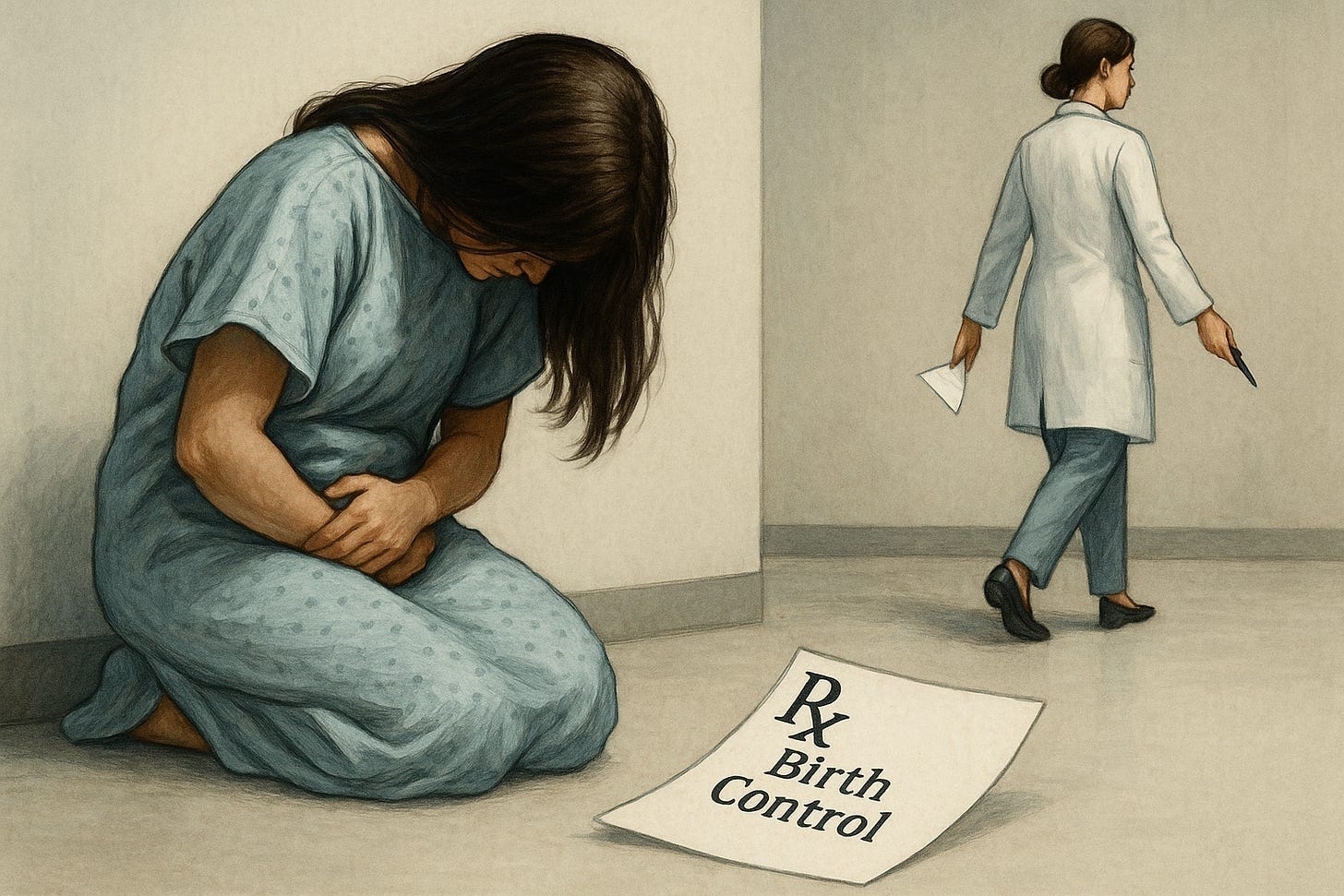
While on birth control, I only needed six or eight Advils at a time instead of eight or ten. Even better, I would often go through seasons where I gave up the pretense of periods and just birth-controlled them out of existence.
One of the many racketeering operations run by the OB/GYN cartel — much more on them in subsequent articles — is that every woman dependent on birth control just to function each month is required to pay the annual tribute of a ritualized sexual assault pap smear.
The excuse for this degradation is that, well, cervical cancer is an STD, and since you want birth control, you must be a promiscuous whore, so we should force you to get a pap smear as a condition of renewing your prescription.
Because, cancer. Also, we care.
Not at all because, otherwise, no one would ever come to see us since we have absolutely no help to offer for any complaints related to the organ system we pretend to be experts in. And God knows, our specialty needs a business model that doesn’t rely solely on delivering babies on call in the middle of the night.
Also, given the ridiculously high false positivity rates of pap smears, it’s nice to bill for the biopsies and follow-up visits when a good chunk of those annual screenings pop up positive. But, I digress.
In my thirties, I sought out a practice that hailed itself as more holistic and less inclined toward the birth control assembly line. They did throw out words like “endometriosis” occasionally. But they had no tools other than surgery — yes, surgery — as the only possible way to diagnose. Modern medicine still can’t tell if you have endometriosis unless they open you up, shake hands with your uterus, and ask it directly.
And what exactly is endometriosis, you might ask?
Here’s their story:
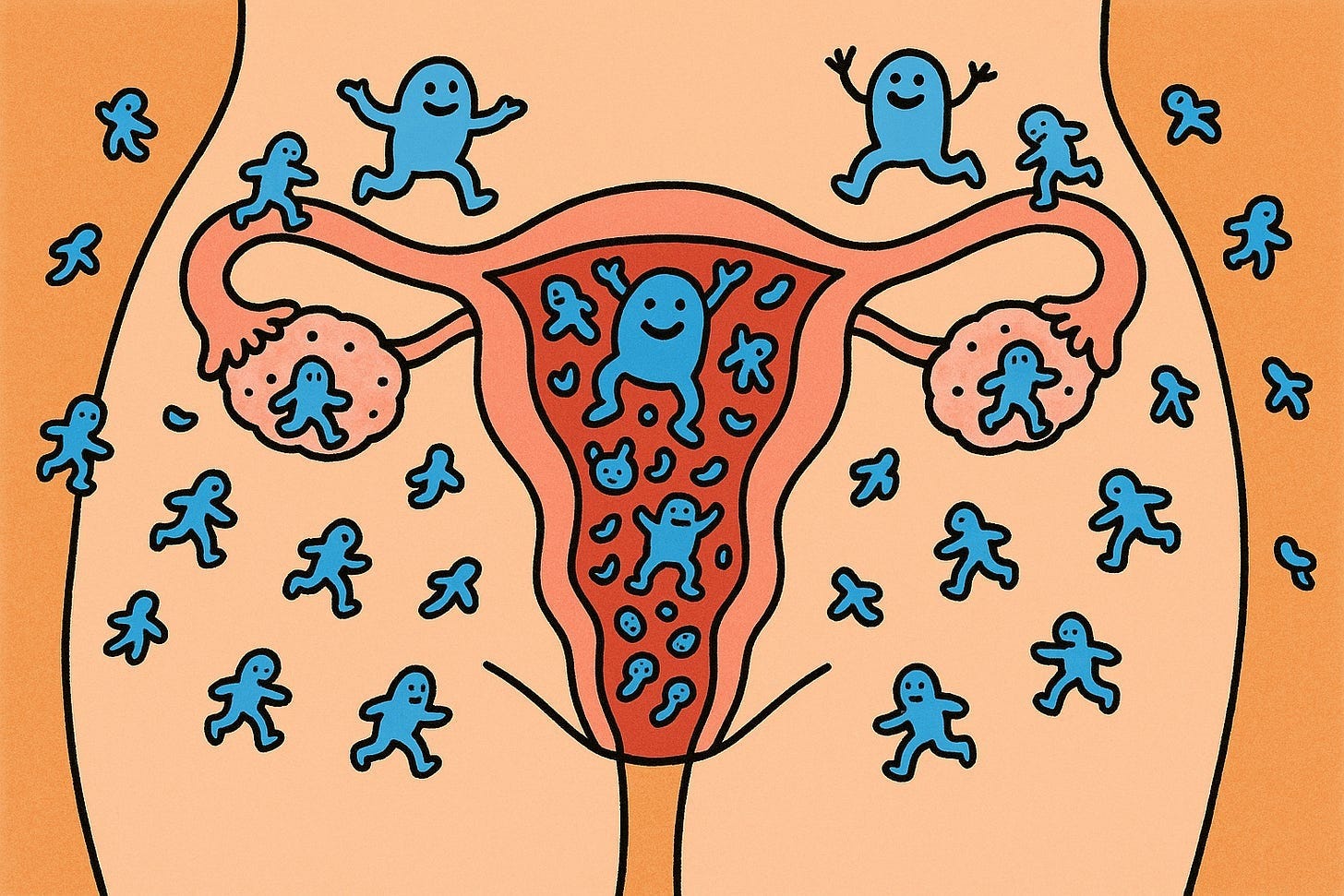
So your uterus has this lining that grows every month, that’s supposed to, you know, stay in the uterus until it gets pushed out as your period. But for some unlucky gals, that lining gets squeezed out the top of the uterus too – into your abdomen, onto your ovaries, your colon, even other parts of your body, God knows where. So now you have little uterus parts all over your body, just waiting for the time of the month when uterus parts respond to a certain hormonal cocktail. When that happens, the jailbroken uterus parts get big and fluffy and inflamed, the same way that the inside of your uterus does right before your period. And that’s why you have all this searing, unbearable cramping — in your uterus. Because of these uterus parts — outside of your uterus.
And maybe you have some other weird, unexplained symptoms. It’s probably the uterus parts there, too.
And if you can’t get pregnant, it’s because of uterus parts smothering your ovaries.
(I mean, we watched my ovaries for ten days straight with the plastic penis probe and didn’t see any uterus parts smothering them, but I digress.)
And how, you might ask, do those uterus parts get out of the uterus? After all, uteruses (uteri?) seem to be amazingly buttoned-up when they have babies in them — the whole enterprise kinda depends on it.
Well, we’re not totally sure, you see. We think that maybe the uterus parts get out through the Fallopian tubes the way the egg gets into the uterus from the tubes. And when your uterus is squeezing out period stuff through the cervix and vagina at the bottom, stuff accidentally gets squeezed out the top through the tubes.
Jailbreak!
We know this because of all that scientific study of endometriosis – oh wait, there hasn’t been any scientific study of endometriosis.
Because, women are yucky.
Especially bloody, crampy, cranky women. And babies are destroying the earth and warming the planet, so who wants more of those anyway?
Instead, we’ll just fund 254 more groundbreaking DEI studies describing how being poor and marginalized leads to health disparities (yes, if you search for DEI terms in the purpose of NIH-funded study abstracts last year, you’ll find them in 14 percent of all studies).
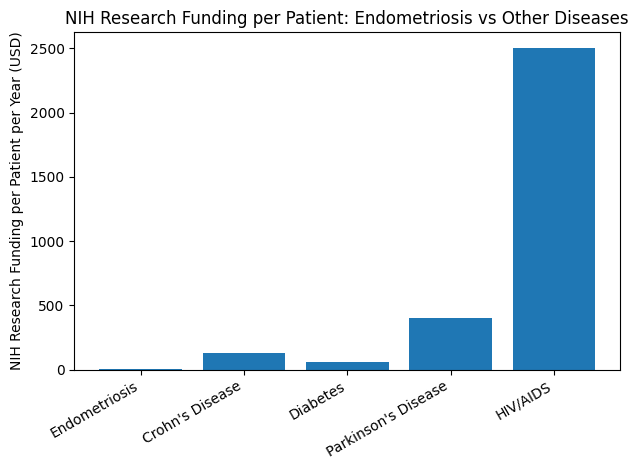
So, yeah, I’m suspicious of these uterus-parts fairytales.
That’s not to say that there aren’t some skilled and high-minded surgeons who have worked miracles at lasering or cutting away certain lesions they’ve labeled endometriosis and gotten good results for their patients. (If you want to find them, see the footnote below.1)
Indeed, there certainly can be inflammatory lesions throughout women’s bodies that are associated in some way we don’t fully understand with pain, infertility, and other symptoms. And removing them might suppress or mitigate those symptoms.
But let’s zoom out for a minute.
Fertility has often been called the fifth vital sign. A smoothly functioning reproductive system, on a routine schedule close to 28 days, with little if any pain, and a moderate amount of bleeding with red (not brown) blood, and the ability to produce an egg from an ovary, present it for fertilization, implant it in a fluffy uterine wall, grow a robust placenta, cook up a baby for close to 40 weeks, push out that baby according to a finely-tuned hormonal symphony, lactate and nourish that baby with all the nutrients it needs for months and even years - that is a wondrous sign of health like no other.
A glitch in that matrix is not a disease; it is a symptom of something else. Women generally aren’t born with a Loestrin deficiency.
When a woman is debilitated by her cycle, develops lesions around her body associated with pain or infertility, or requires the cessation of ovulation and the presence of synthetic hormones to induce what seems like a reasonable bleed, these are BLARING RED SIRENS that her body is in meltdown.
What should be a five-alarm fire for a doctor who sees these symptoms instead usually results in what I got — a shrug and a birth control script.
And so, women’s bodies continue their decline and hey, we can bypass it all with IVF, so everything’s cool.
(By the way, men’s infertility is screaming the exact same alarm at us. Average sperm count worldwide has declined by more than half since 1970.)
Houston, we have an extinction-level problem.
Medicine for Humans
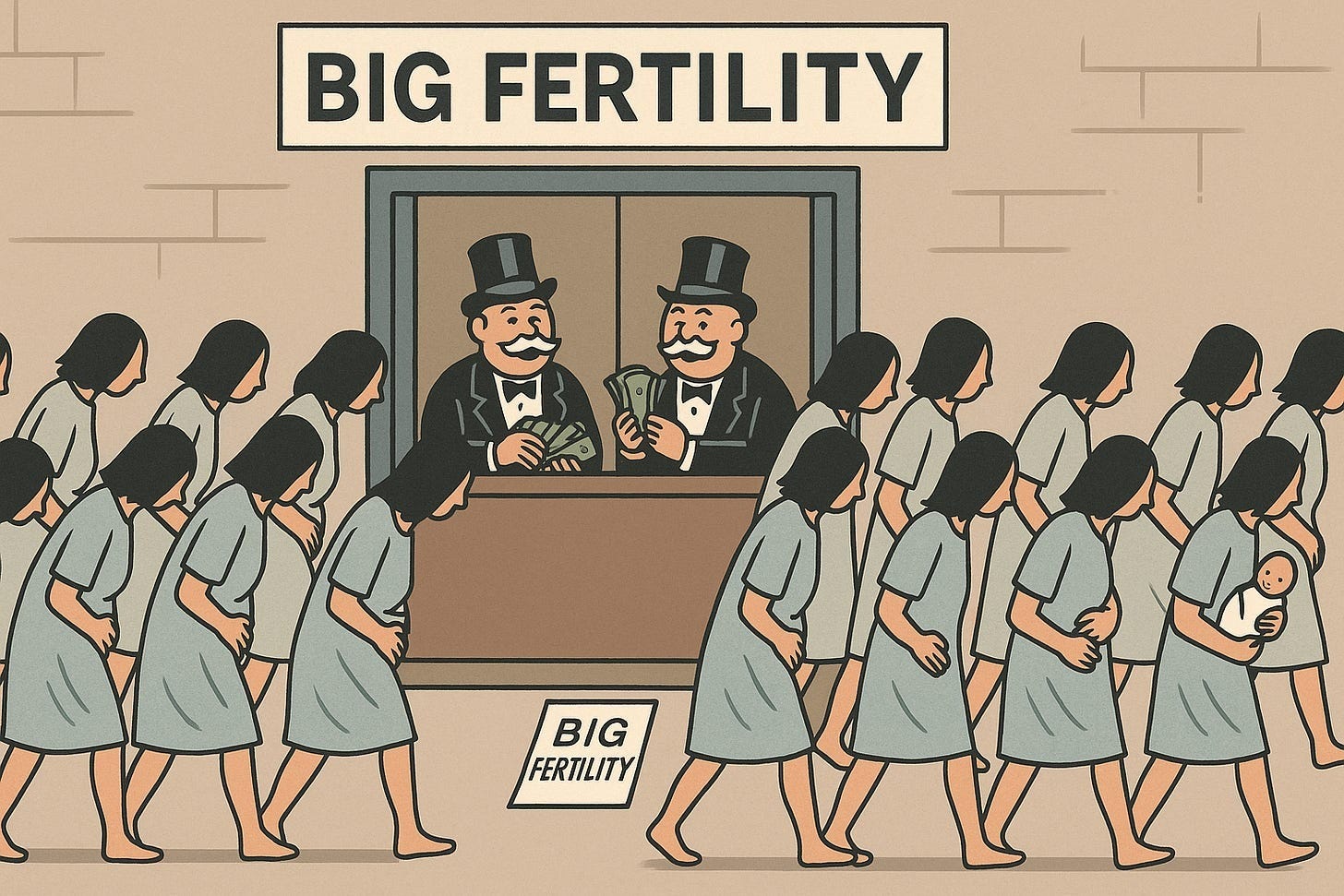
The unbelievably good news is that fertility and hormonal regulation are significantly improved when we live like humans. I say “unbelievably” because most people don’t believe it’s so simple, and you sure as heck wouldn’t know it from the impotence (pun intended) of most OB/GYNs and the metastasis of the $20 billion Big Fertility industry.
It turns out that, like every other species that shares our planet, there are some species-specific requirements for optimal human health, including fertility.
In humans, in order to stave off illness and decline, every day we must:
Sleep like a human: Seven hours for men, eight hours for women.
Fuel like a human: If your great-greats wouldn’t recognize it or couldn’t make it in their kitchen, it shouldn’t go in your body.
Recharge like a human: Your body is a battery made of conductive water – touching earth and sunlight provide essential electrical charge (and many other benefits).
Move like a human: Walk, jump, lift, carry, clean, garden, and so forth.
Pray like a human: There’s never been a human society until ours that didn’t.
Relate like a human: We die without a pack, period. E-friends don’t count.
When was the last time your OB/GYN checked in on all six of these species-specific requirements (or even one)?
For me, that would be never.
Even the highest quality, most envelope-pushing, innovative-thinking OB/GYNs I worked hard to find and traveled far to see — none of them ever considered that one or more of these issues might be a primary contributor to my hormonal chaos.
The Body’s Cry for Help
I eventually became a traditional naturopath because, after decades of working in the U.S. Senate and then in the White House, tasked with making the health care system work better for patients, I had a revelation.
We were subjecting sick people to procedure after procedure, sending them — and the U.S. treasury — into bankruptcy. Half of the entire, multi-trillion-dollar federal budget is spent on “health” care.2
And for what?
We are still the sickest, fattest, saddest, most anxious, most infertile, most medicated population in human history.
In my own family, my little sister, a 39-year-old mother of two little boys, was dying of colorectal cancer while I was a top health advisor to President Trump.
I could pick up the phone and yell at the CEO of her hospital about how she was being treated. I could get the world’s best experts to review her records and monitor her care. And none of it made a damned bit of difference.
I watched my radiant, beautiful sister — my only sibling and my best friend — die the most horrific, degrading, dehumanizing, excruciating, and prolonged death.
While I was processing the trauma my family had just experienced, I also vowed that that sure as hell wasn’t gonna happen to me. That’s when my own health journey finally started.
I studied the laws of nature and how they play out in our bodies. I launched my naturopath practice and, later, this AllBetter Substack publication in the recognition that the very safe, very effective “live like a human” prescription is the one medical directive that’s never prescribed.
It’s not even part of the conversation.
But our dehumanized, unbiological lives are why so many of us are struggling to reproduce.
When you are being chased by a bear, your autonomic nervous system turns on the fight-or-flight physiology — spiked cortisol, shallow breathing, glucose flooding your bloodstream, circulatory changes and many others.
Simultaneously, your parasympathetic nervous system shuts down — the system that helps you detox, digest, and reproduce. It’s not smart for your body, which is always trying to protect you, to spend energy on those important but not urgent tasks until you’ve escaped the bear.
But what if the bear lives in your house, at your job, on your Instagram page, or in your head? Our overstimulated, highly-stressed lives are physiologically unsafe to an unprecedented degree in the human experience. Accordingly, our bodies are shutting down detoxification, digestion, and yes, fertility, until some elusive safety is restored.
Living like a human — with enough sleep, real food, functional movement, and contact with nature, a higher power, and our fellow humans - signals to our bodies that we’re safe enough now to make a baby.
Species-specific living very often resolves many of the underlying pathologies driving or exacerbating infertility. Things like insulin resistance, inflammation, nutrient depletion, adrenal fatigue, autoimmunity, food sensitivities, gut dysbiosis, circadian disorder, anxiety/depression, chemical toxicity, and so forth.
Biology is brilliant. Your body is on your team.
I thought mine was the enemy. I cursed my uterus every month. Bent over in pain, I laid hands on it and wished it would wither and die.
It did.
But that shouldn’t have been the end of the story.
What if, instead of being hexed as “Infertile, World Without End,” I was given a prescription to live like a human?
The Dream-Patient
Women complaining of infertility present an exceptional opportunity that most clinicians never get — a patient totally willing to do whatever it takes to heal.
I would have given up my Diet-Coke-as-sole-hydration habit, my vending machine diet, my cortisol-spiking job, my sedentary seclusion, my doomscrolling midnights, or my four-hour sleep schedule. Of course I knew that these weren’t the healthiest routines, but I had no idea that they might have been the root cause for all my hormonal chaos, inflammation-induced agony and infertility.
I would have changed. I would have tried anything. I damned well wouldn’t have accepted a permanent branding and given up.
Women are mothers before they are mothers.
Meaning, we will sacrifice heroically for a baby way more than we would for our own health, even before we’re ever pregnant.
Just look what the IVF industry puts women through, with the vast majority of IVF cycles not producing live babies, and the vast majority of embryos created by the process destroyed rather than implanted in their mother.
This isn’t to say that there wouldn’t be occasional infertility in a hypothetical world full of females living like humans. I might not have conceived, even if I had changed — the long years of damage may have been irreversible.
But now I’ll never know.
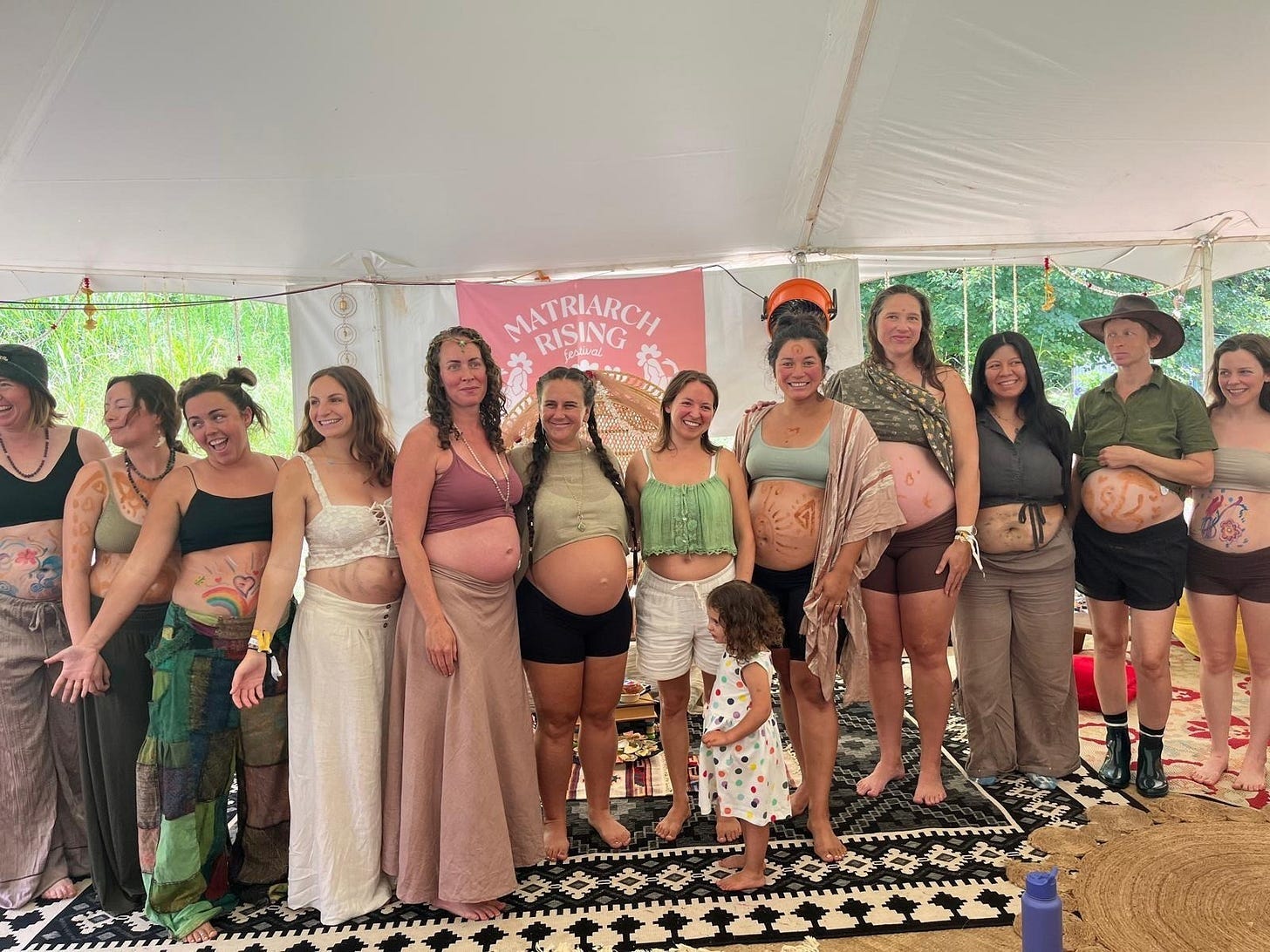
Since my health journey didn’t start until later, I didn’t know then what I know now. But if I had, it might have changed everything. I might have become this Earth-Mama hippie early enough to birth some babies:
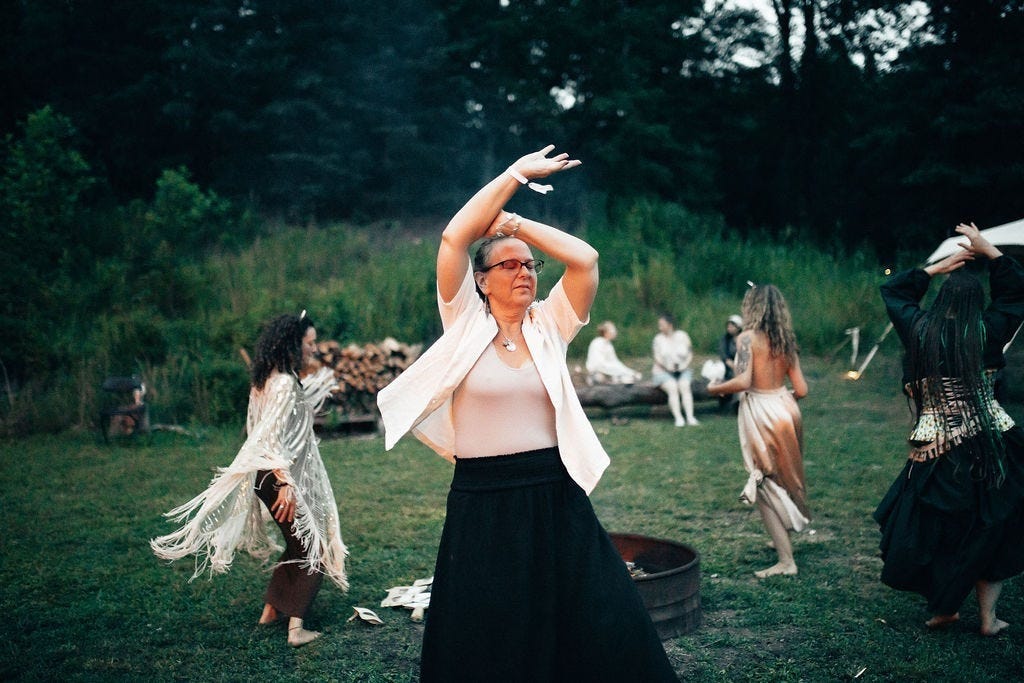
Doctors have so much power to rewrite this story — and I’m not just talking about OB/GYNs.
Patients who adopt species-specific requirements often improve as much as or far beyond what any prescription can deliver.
The beauty for clinicians is that, as the presenting symptom or lab result you’re targeting improves, so do innumerable adaptations that have been brewing, that neither you nor the patient know about yet — including infertility.
That’s why clinicians who are burned out, demoralized, and frustrated with their limited tools of limited effectiveness should consider a more transformative continuing education than the dumb hours they have to box-check to keep their board certifications each year.
The Latin root of the word “doctor” means teacher, not writer of symptom-suppressing prescriptions.
Becoming an expert in the live-like-a-human, species-specific requirements and especially in how to communicate them to patients and support patients in healing themselves could very well give your career the second wind you’ve been craving.
Are you ready to hack the systems that control your health? Join the Revolution by subscribing to AllBetter with Katy Talento.
A Different Kind of Happy Ending
Before we close, it’s worth a final note on my own adventures in maternity.
We’re told — and sometimes even believe — that God uses even what is evil for good. We did adopt, almost immediately after the infertility hex was placed, burying my dreams of baby-making. We knew that there were years-long lists of couples waiting for babies to adopt, and years-long lists of older children waiting for parents to adopt them. We chose to fill the latter gap instead of adding to the former.
Our kids are grown now. Our journey with them has been poignant and fierce and surprising and beautiful, and maybe will be told sometime later.
The capstone of it all is that we now have three tiny humans who have spectacularly failed to disprove a single, overused cliché about the delights of grandparenting.
And maybe my story might help some of you get your own such miracles — nature’s way.
Before you drug up or pony up, it’s worth a season of aggressively redirecting all that money and energy away from Big Fertility and instead toward living like a human —simple steps but by no means easy in the over-processed, blue-lit, cortisol bath we’re swimming in.
Note to myself and you: start with the Diet Coke.
1 To find a physician trained and experienced in restorative reproductive medicine (RRM), click here.
2 Study by your humble correspondent and a Johns Hopkins research team demonstrating half of all federal dollars are spent on health are — much more than previously reported.

Are you ready to hack the systems that control your health? Join the Revolution by subscribing to AllBetter with Katy Talento.
Them Before Us is a global movement committed to defending children’s right to their mother and father. We believe that adult desires should never come at the expense of a child’s fundamental needs.
We are not professional lobbyists or political insiders. We are ordinary people with an extraordinary conviction: children must come first in every conversation about marriage, family, and fertility. We exist to make one thing clear: when adults sacrifice for children, society thrives. When children are forced to sacrifice for adults, everyone pays the price.
Find us around the web: Facebook, X, YouTube, Instagram, Podcast, TikTok & Radio.
 | A guest post by
|